
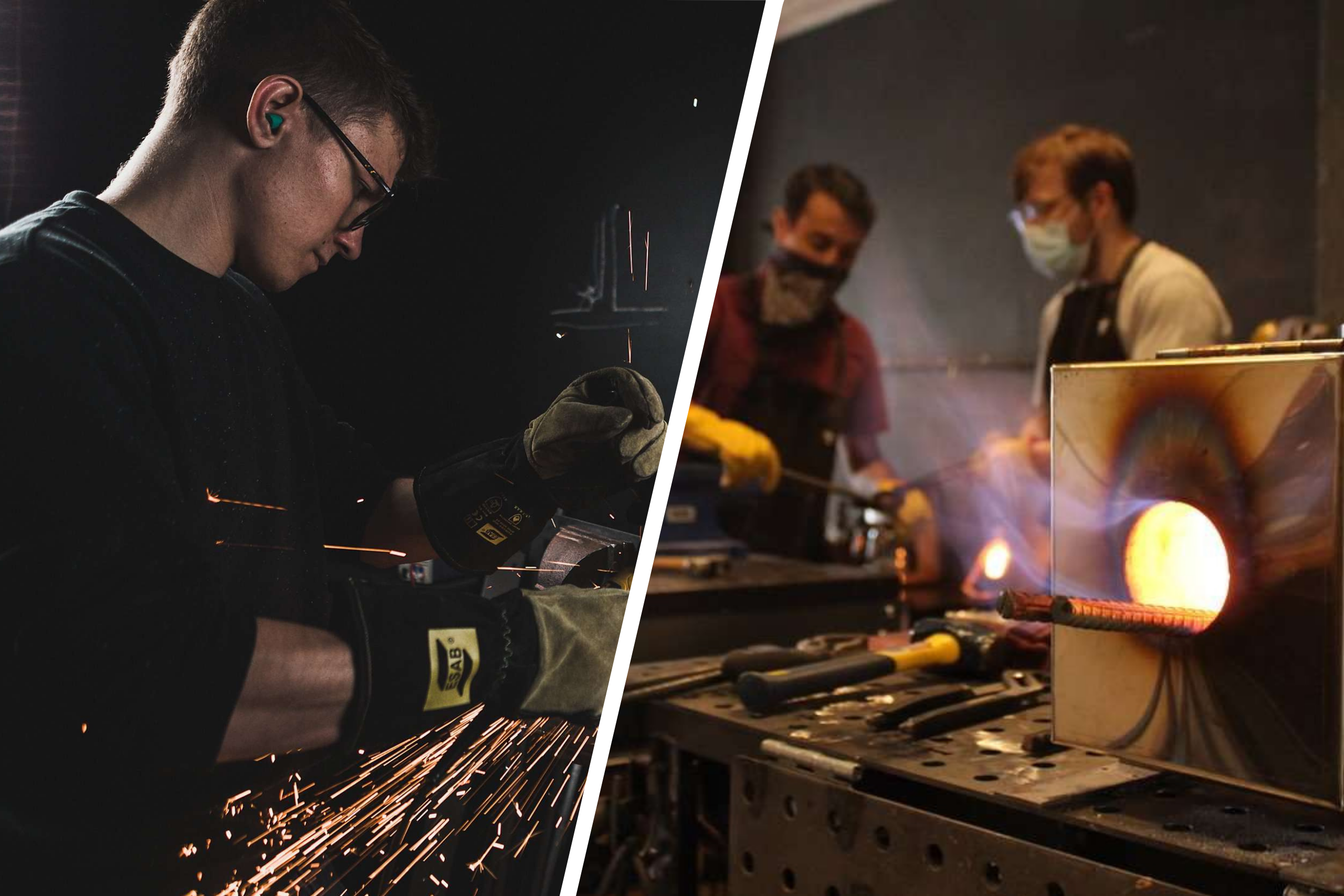
Welding and blacksmithing both involve metal, serious heat, specialized tools, and the opportunity to make some pretty badass stuff. But welding vs blacksmithing comes down to one major distinction: welding primarily joins pieces of metal together, while blacksmithing heats and reshapes metal into new forms.
So, is welding and blacksmithing the same thing? Nope. They’re related metalworking disciplines, and there’s some overlap between them, but the techniques, tools, and goals are different.
If you’re trying to decide which one you’d rather try, here’s what you need to know.
Welding vs Blacksmithing at a Glance
| Welding | Blacksmithing | |
| Main purpose | Join pieces of metal | Shape and manipulate metal |
| Basic process | Melt and fuse metal at a joint | Heat metal until malleable, then reshape it |
| Common tools | Welder, torch, clamps, grinder | Forge, anvil, hammer, tongs |
| Typical projects | Furniture, sculptures, frames, fabricated objects | Knives, tools, hardware, decorative ironwork |
| Beginner-friendly? | Yes, with proper instruction | Yes, with proper instruction |
How Are Welding and Blacksmithing the Same?
Welding and blacksmithing are both forms of metalworking that use heat, tools, and an understanding of how different metals behave. Both can be used to make functional objects, art, furniture, tools, and plenty of things you’ll want to show off afterward.
Both Require an Understanding of Metal
Metal isn’t exactly known for being cooperative.
Both welders and blacksmiths need to understand how different materials respond to heat, pressure, cutting, bending, and cooling. Temperature and technique can dramatically change how easily a piece of metal can be worked and how strong the finished product will be.
Fortunately, you don’t have to become a metallurgist before you’re allowed near an anvil.
Beginner classes like the blacksmithing workshops at Craftsman Ave are designed to teach you the fundamentals while an experienced instructor helps make sure you’re using the tools correctly.
Both Involve Heat, Tools, and Safety Gear
Neither craft is particularly subtle about the fact that you’re working with very hot metal.
Welders and blacksmiths use specialized tools, eye and face protection, gloves, appropriate clothing, and properly equipped workspaces. Learning from someone who knows what they’re doing is especially important when you’re getting started.
At Craftsman Ave, beginner-friendly workshops include the tools, materials, protective equipment, and guidance needed for the project.
Both Can Be Functional and Creative
Welding isn’t limited to industrial construction, and blacksmithing isn’t limited to making horseshoes in a barn somewhere.
Modern makers use both disciplines to create everything from furniture and household objects to knives, sculptures, decorative pieces, and custom art.
That’s part of the appeal. You get the technical satisfaction of learning how metal works while still having plenty of room to make the finished project your own.
What Is the Difference Between Welding and Blacksmithing?
The biggest difference between welding and blacksmithing is what you’re trying to accomplish with the metal.
Welding primarily joins two or more pieces of metal together by creating a permanent bond. Blacksmithing heats metal until it becomes malleable, then uses tools and physical force to shape, bend, cut, or texture it.

Welding Joins Metal Together
Modern welding is primarily a joining and fabrication process.
A welder concentrates intense heat at the place where pieces of metal need to connect. The base metal at that joint melts, and depending on the welding method, filler material may also be added. Once everything cools, you’re left with a permanent connection between the pieces.
At Craftsman Ave, for example, the beginner-friendly Weld a Steel Rose workshop introduces participants to MIG welding as they join individual steel components into a finished rose.
Think less “beat glowing metal with a hammer” and more “take these separate pieces and make them one.”
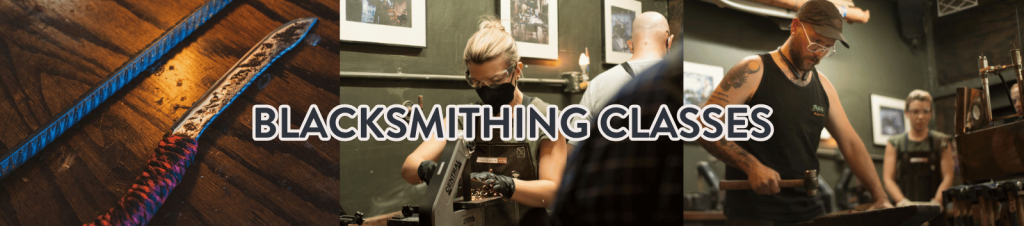
Blacksmithing Shapes Hot Metal
Blacksmithing takes a different approach.
A blacksmith heats iron, steel, or another workable metal in a forge until it becomes hot and malleable. Instead of melting the entire workpiece, the goal is generally to soften it enough that it can be reshaped using controlled force.
The process often looks something like this:
- Heat the metal.
- Grab it with tongs.
- Hammer it against an anvil.
- Bend, flatten, stretch, or texture it.
- Put it back in the forge.
- Repeat until it resembles the thing you were trying to make.
Blacksmiths use techniques such as drawing out, bending, twisting, punching, cutting, and upsetting to transform the original piece of metal.
What Tools Do Welders and Blacksmiths Use?
The toolkits make the distinction pretty obvious.
• Welding machine
• Welding torch or gun
• Welding helmet
• Gloves
• Clamps
• Angle grinder
• Forge
• Anvil
• Hammers
• Tongs
• Chisels
• Punches
There’s some crossover in a modern metal shop, but you’re probably not confusing an anvil with a MIG welder anytime soon.
What Can You Make With Welding vs Blacksmithing?
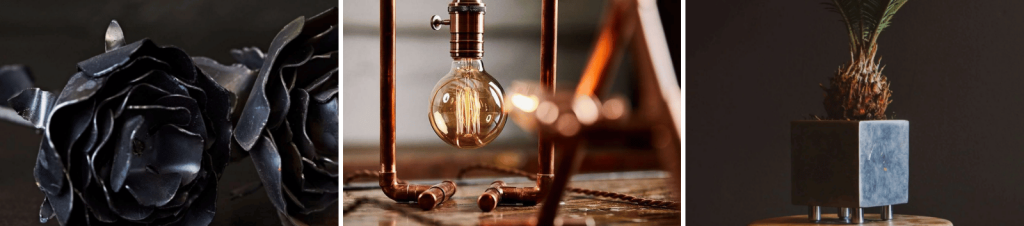
With welding, you might create:
- Steel furniture
- Sculptures
- Frames
- Planters
- Decorative objects
- Fabricated structures
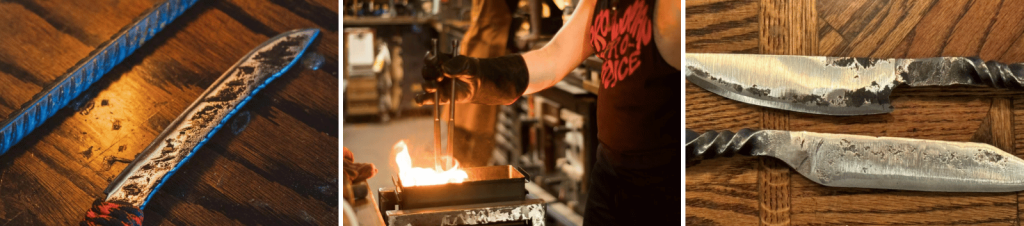
With blacksmithing, you might make:
- Knives
- Tools
- Hooks and hardware
- Decorative ironwork
- Sculptural objects
- Forged household pieces
Knife making is an especially good example of how several metalworking skills can come together. Craftsman Ave offers multiple knife-making classes, including the Forge a Survival Knife workshop, where beginners shape heated steel into a functional blade.
Welding vs Blacksmithing: Which Should You Try First?
Neither welding nor blacksmithing is automatically better for beginners. The right choice depends on what you’d like to make and which process sounds more fun.
Try Blacksmithing First If…
Blacksmithing might be your thing if:
- You want the classic hammer-and-anvil experience.
- You want to shape glowing steel.
- You’re interested in traditional forging.
- You’d love to make a knife or forged object.
- Hitting hot metal with a hammer sounds like an excellent afternoon.
👉 For a deeper dive, check out Craftsman Ave’s blacksmithing workshop options.
Try Welding First If…
Welding might be the better starting point if:
- You’re interested in metal fabrication.
- You want to join pieces into larger objects.
- You like sculpture or functional design.
- You want to learn modern welding equipment.
- Flying sparks sound more exciting than alarming.
👉 Browse the available welding and metalworking workshops to see what you can build.
Still Can’t Decide? Try Both.
You can read about welding vs blacksmithing all day, but there’s a much more entertaining way to figure out which one you prefer: put on the gear and actually try it.
Craftsman Ave’s Brooklyn workshops are designed for beginners, and all the tools, materials, safety equipment, and instruction you need are provided. You show up ready to learn, get your hands dirty, and leave with something you made yourself.
Explore all Craftsman Ave workshops and find out whether you’re more of a welding person, a blacksmithing person, or someone who simply likes playing with fire.
FAQs About Welding vs Blacksmithing
Is welding and blacksmithing the same thing?
No. Welding primarily joins pieces of metal together, while blacksmithing heats and reshapes metal using tools and physical force. They are separate metalworking disciplines, although makers may use both techniques on the same project.
What is the main difference between a welder and a blacksmith?
A welder specializes in joining metal components, while a blacksmith specializes in heating and reshaping metal. Welders commonly focus on fabrication, while blacksmiths often forge tools, knives, hardware, and artistic pieces.
Do blacksmiths use welding?
Yes. Modern blacksmiths may use welding when assembling certain projects. Welding can be a useful complementary skill even when forging is the primary method used to shape the metal.
Is welding or blacksmithing easier for beginners?
Both can be beginner-friendly with proper instruction and safety equipment. Choose blacksmithing if shaping hot steel appeals to you, or welding if you’re more interested in joining metal and fabrication.
Do you need to learn welding before blacksmithing?
No. You can learn blacksmithing without knowing how to weld. The two skill sets can complement each other, but neither is a prerequisite for learning the other.